

Earlier this month, I had the privilege of attending a workshop where we discussed, among many things, the challenges of sending humans to Mars. It was one of the more multidisciplinary conversations I’ve been a part of: with geologists, geophysicists, engineers, and doctors present, we were able to dive into the details of a mission at the operational level, and quickly work through what the scientists wanted to learn about the planet, what the engineers would have to build to help us get there, and what the astronauts would have to do once they were on the surface. It was an eye-opening experience. I learned a lot about rocks, and the geologists learned a lot about what it takes to keep people alive in space.
One topic our group kept circling back to was human health and performance. See, microgravity is not kind to the human body. Our 25+ years of experience on the International Space Station has shown that astronauts will, on average, lose about 1-1.5% of their bone density per month over the course of a 4-6 month mission, increasing their risk of bone fractures or breakage. Spaceflight also reduces aerobic capacity: NASA reports from the Space Shuttle era showed that crewmembers who did not perform exercise countermeasures experienced a 12-15% decrease in VO₂max, compared to those utilizing the treadmill or rower, who experienced a 3% and 6% reduction, respectively. Even with 600+ minutes/week of strength and cardiovascular conditioning onboard the ISS, aerobic capacity is not perfectly preserved in long-duration spaceflight. In a recent 46-astronaut ISS study, VO₂peak has been shown to fall an average of 7.4% ± 2.0% over the course of a ~6 month mission.
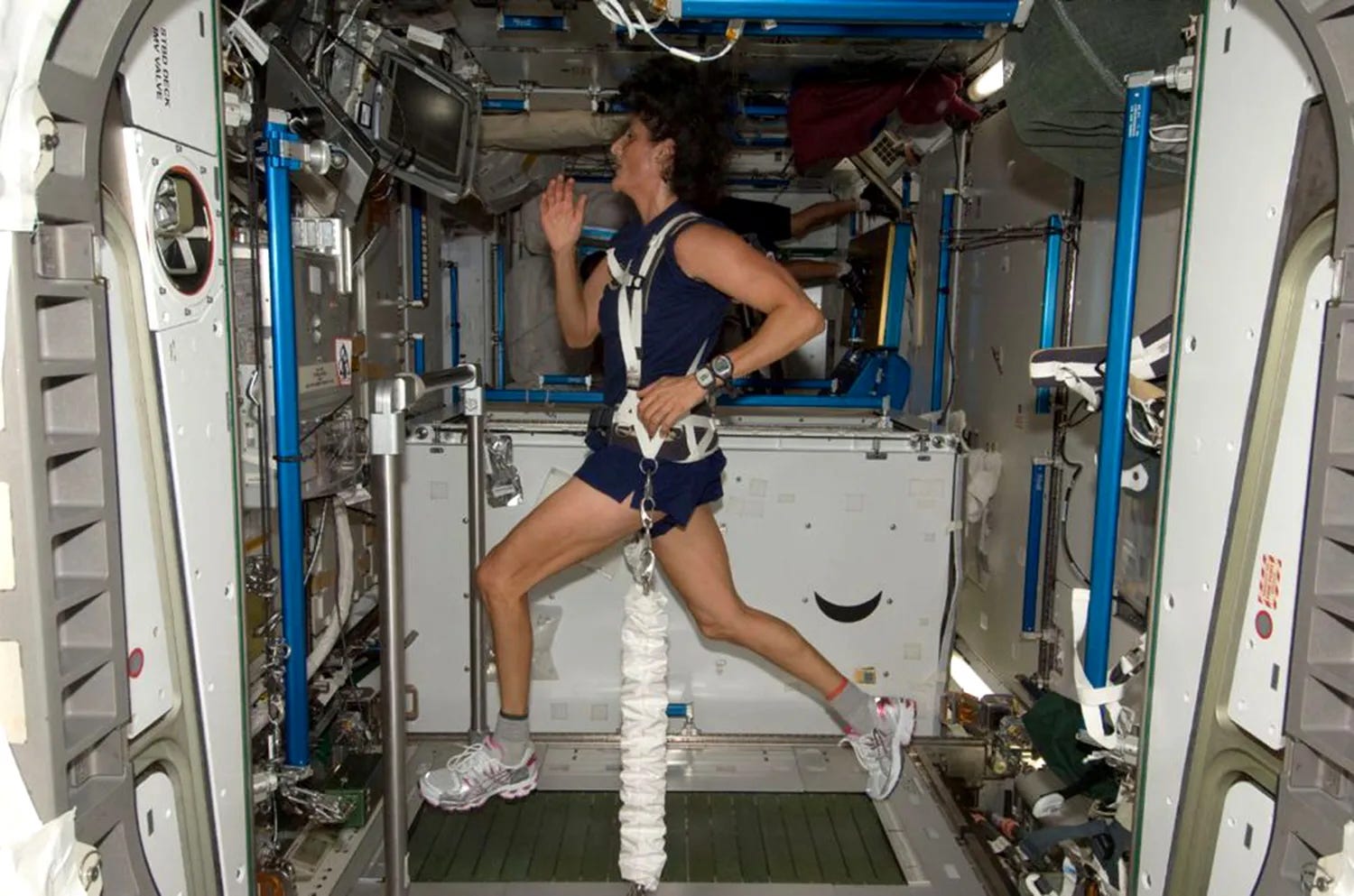
Similar trends are seen in musculature attenuation, with long-duration microgravity exposure causing significant muscle volume reduction across both the lower body and key spinal-stabilizing muscles that matter for posture, movement, and back health after landing. Microgravity living also causes headward fluid shifts, vestibular disorientation during gravity transitions, and subtler cognitive effects; in a 2024 study of 25 astronauts on roughly six-month ISS missions, overall cognition remained stable, but processing speed, visual working memory, and sustained attention slowed during parts of flight.
What does this mean for Mars?
It means that even with countermeasures, when astronauts land on the surface of Mars, they will be both aerobically and muscularly deconditioned, susceptible to bone fractures, and probably nauseous from the gravity change. Cognitively, they will be far less sharp than when they started the mission. They may be unable to perform extravehicular activities (EVAs) for days, or even weeks, after they touch down. This is not an ideal way to start your 30-day geology field trip.
So, how do we train for this?
Astronauts are not “athletes” in the normal sense, but they are what I would call “high-performance operators.” They are selected for physical, cognitive, and emotional resilience; they are trained over years, monitored continuously during their “event” (a mission), and are asked to push their bodies far beyond what most people would consider reasonable for their day job.
Sports science provides a useful analogy for astronaut physical training in many ways. In both scenarios, we are working with a small sample size of highly-trained, highly-motivated individuals who are not really representative of the normal human population. In both cases, they are training over the course of months or years to optimize performance during a specific window. For both sets of subjects, their psychology matters in addition to their physiology.
Our ISS experience has shown that structured aerobic and resistance exercise can reduce the deconditioning that astronauts experience during spaceflight, but not fully eliminate it. Over the course of a long-duration Mars mission, astronauts will have to spend a record number of days in microgravity. Will 600 minutes of exercise each week be enough? Probably not. So how do we prepare astronauts for the longest endurance event of their lives?
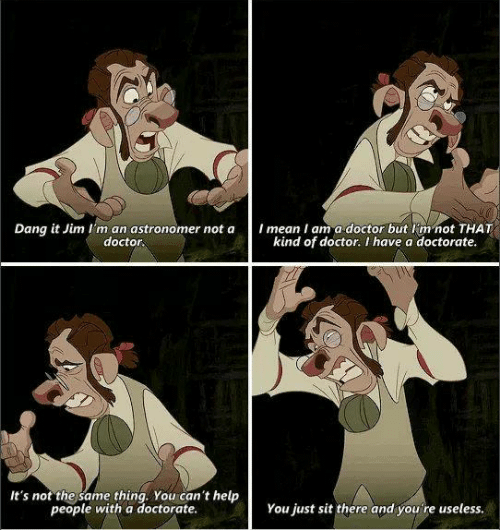
Disclaimer: I am not a medical doctor. I have a doctorate, but that’s not the same thing as an MD. I am simply an engineer who is looking to better understand the health and performance challenges of future spaceflight missions. And, as a hobby endurance athlete, I want to think about spaceflight through the lens of sports science.
Because I have no sense of self-control, I’m going to break this thought experiment up into a multi-part series. In the first part, I’ll perform a brief literature review on two initial topics:
Spaceflight: the state of the art of exercise countermeasures, astronaut health, and spaceflight performance
Sports science: the state of the art in sports science and endurance training that is most relevant to spaceflight and surface EVA.
Then, I want you to hold my hand as we jump into the abyss together, and imagine a future Mars mission. For the purposes of this series, I will be baselining the 30-sol surface mission described in the recent National Academies report, A Science Strategy for the Human Exploration of Mars. With this mission profile as our case study, I want to apply sports science to astronaut health and performance across the following topics:
Pre-selection: who do we choose as astronauts, and what is their training history? What is their response to specific training stimuli, and how can we optimize that for a desired result?
Macrocycle training: I want to examine macrocycle or quadrennial training in sports science, and view long-duration spaceflight missions through this lens. What if we thought of astronauts’ pre-flight training, in-flight training, and surface operations akin to an Olympic cycle, with the goal of achieving a specific level of performance at a defined point (the Martian surface)?
Operations and team performance: Now, stick with me: what if we thought of astronaut surface operations as a cycling grand tour? i.e., a three-week-long endurance event, with the goal of optimizing performance across the event, given constraints (in the astronaut’s case, muscle atrophy and deconditioning ahead of landing, and the science goals of the mission). To go a step further: what if we thought of the crew makeup itself like a cycling team? Is there a trade to be made during selection, training, and operations? Are some more suited to EVA?
To be clear, I’m not expecting (or claiming) a 1:1 transfer of recent sports science advances to astronaut health and performance. They are, fundamentally, operating under very different constraints, with very different daily activities and requirements. Instead, my goal is to use this series as an opportunity to educate myself on the state of the art across both fields, and as a way to combine my love of endurance training with my day job.
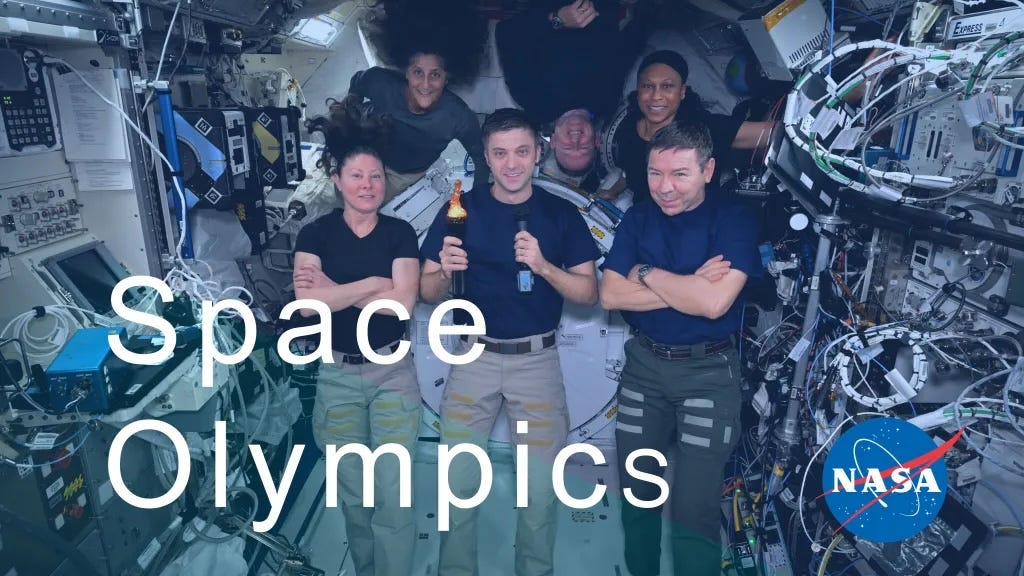
But if we could one day have a space Olympics…
See you next time for our review, where I’ll dive a bit deeper into how we keep astronauts alive, healthy, happy, and productive—and how our top athletes are training here on earth.
Ad astra!
Oooh I love the cross disciplinary thinking here and definitely am following your thinking with learnings to be shared across astronaut training / conditioning / support and high-caliber endurance athletes. So cool!