

A few days ago, I reached a 800-day Duolingo streak.
In total, I’ve been using the Duolingo app for over 1100 days. Tragically, I lost my first streak ~350 days in, and had to start over. But I started this particular run back in 2023. I had just moved back to Boston, and my aunt, who lives locally, encouraged me to check out an upcoming Ukrainian Independence Day festival. There, my husband and I experienced a beautiful array of vendors, performers, and artists; we listened to live music, watched a fashion show put on by Ukrainian designers, and heard stories of resilience from across the community.
That day, one vendor in particular stood out to me: she was an older woman, an artist, who was exhibiting her beautiful paintings of flowers. I approached her, wanting to compliment one work in particular—a vase of sunflowers against a blue backdrop—but I quickly realized she didn’t speak English. Eventually, her son stepped in and translated for me, but I remember feeling an overwhelming sense of shame and embarrassment. How could I recognize so many cultural touchstones, and yet have so much trouble communicating with people who shared so many of my traditions?
For context, I am Ukrainian-Canadian, and a portion of my family is from the diasporic enclaves of Saskatchewan, where road signs and buildings are still primarily written in Cyrillic. Ukrainian was my grandfather’s first language. It was, ironically, the same feelings I had—shame, and embarrassment, but in the opposite direction—that led him to raise his own children in his second language. And so in my family, the language was lost.
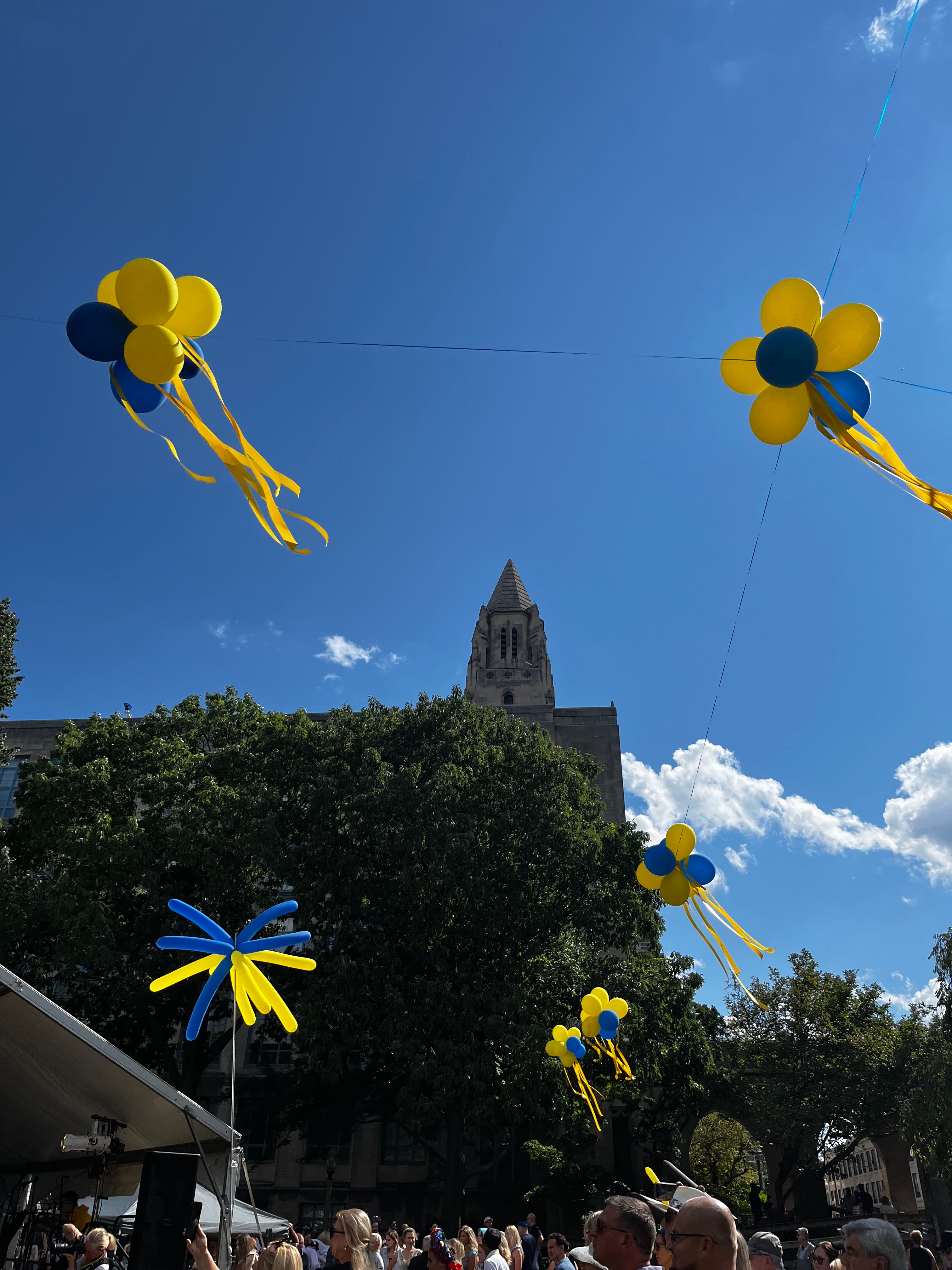
I walked away from that festival determined to learn Ukrainian, driven by a nagging sense of guilt. I wondered if I could claw back culture that had been lost through generations. (My answer, now, is probably not; but maybe?) I was hoping I could learn enough to speak Ukrainian at future festivals, and volunteer my time with Ukrainian organizations. This desire led me, inevitably, to Duolingo.
Anyone who has used this app knows that it does not really teach you a language. And so it will come as no surprise that Duolingo did not succeed in teaching me Ukrainian. I never really had any illusions that it would. But using the app was easy: I opened it every day, I did my little word matching exercise, I listened to some basic sentences, and then I was rewarded with experience points. Duolingo is language learning, gamified. It gave me the illusion of a progress without any of the struggle.
For a while, I was okay with this. You see, I don’t take to languages naturally. In high school, I studied Spanish. I was decent at reading and writing, but when it came to speaking, I was pretty atrocious. In retrospect, I now realize that this was because I am, and always have been, really really bad at being bad at things. I was afraid of mispronouncing things, so I spoke softly. I was terrified of embarrassing myself, so I never tried to affect an accent.
I am someone who does not want to be seen struggling. I do not like existing in the murky beginning of a new skill or hobby, when you are caught not knowing things. I was—shocker!—an awkward, nerdy kid, and I so I spent a lot of effort trying not to be “cringe.”
And learning a language, at its heart, can be a little bit cringe. To truly learn a language, you have to commit to the bit. Study all you want, but eventually, you have to speak it—you have to be in conversation with someone else. You have to be perceived, which inherently puts you at risk of judgement. And eventually, you are going to make mistakes. “Learning” a language through an app gave me the security to do it without any judgement. I could be bad on my own terms, without any human interaction. I also never, ever got any better.
Earlier this year, I had a moment where I looked at my Duolingo streak—500+ days—and realized that I could barely string a basic sentence together in Ukrainian. What was I actually doing, spending 5 minutes of my life on this app every day? What if instead of paying to click away, I spent one hour a week working with an actual Ukrainian teacher?
And so I did. For the first time since high school, I’m learning a language again. Through a friend of a friend, I got connected to my teacher, a Gen Z Ukrainian teacher and working professional living in Kyiv. She’s patient, which is good, because at first I was really, really bad. I read Cyrillic characters wrong. I couldn’t pronounce the language’s plethora of “e” vowels. Sometimes, in a panic, I even said Spanish words instead of Ukrainian words. It was embarrassing.
But in the 200 days since I started taking lessons with my teacher, I have learned more Ukrainian than I did in literal years on Duolingo. I am now pretty confident that I could enter a cafe, or a restaurant, and order food with specific requests. I could maybe even haggle in a market. It’s not much, but it’s progress.
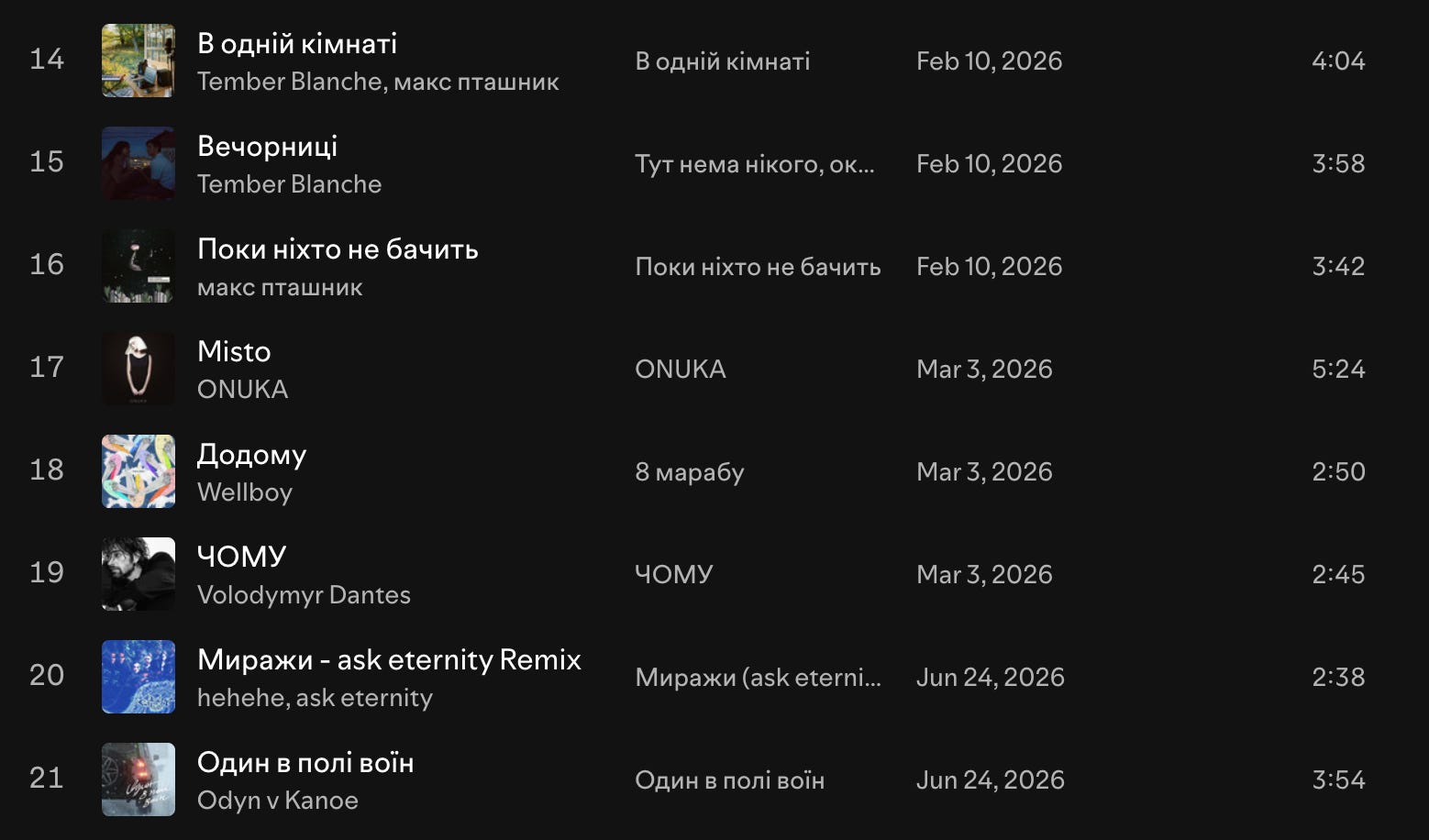
If nothing else, learning from a real teacher has also given me so much more than an app would. I can ask clarifying questions, learn relevant vocabulary, and spend more time where I need it. She sends me interesting articles, popular music, and fun videos to watch as a way to engage with the culture beyond memorization. (Also, I am directly paying someone for their labor, rather than a faceless company. And that itself feels good!)
In the past few years, I’ve redefined my relationship with many modern conveniences. I’ve started to cut out anything that has made life just a bit too easy, frictionless, or gamified. Short form videos and LLMs take away the friction that makes information stick. Food delivery apps and online shopping steal the micro doses of human interaction that lead to everyday serendipity. I’ve been thinking a lot about the quote from Kurt Vonnegut, when he tells his wife he’s going out to buy an envelope:
“Oh, she says, well, you’re not a poor man. You know, why don’t you go online and buy a hundred envelopes and put them in the closet?
And so I pretend not to hear her. And go out to get an envelope because I’m going to have a hell of a good time in the process of buying one envelope.
I meet a lot of people. And see some great looking babies. And a fire engine goes by. And I give them the thumbs up. And I’ll ask a woman what kind of dog that is. And, and I don’t know. The moral of the story is — we’re here on Earth to fart around.
And, of course, the computers will do us out of that. And what the computer people don’t realize, or they don’t care, is we’re dancing animals. You know, we love to move around. And it’s like we’re not supposed to dance at all anymore.”
Let’s all get up and move around a bit right now…or at least dance.
I used to be someone who tried to optimize every facet of my life. I’d get stressed if conversations kept me up too late, or if plans changed last minute. I’d get annoyed by small talk in grocery lines. Now, I know that’s where the fun is.
I don’t need the convenience of learning a language through an app. I want to talk to someone. I want them to see me struggle. I want to embarrass myself, to work for it, and yeah, I want to be a little cringe.
That’s the only way I’m ever going to get better.
Omg I’ve been in such a similar boat, love this post so much! Have done a mix of trying to learn Vietnamese in classes and with a teacher to reconnect with culture more formally. It does feel a bit embarrassing to not have grown up super fluent and being more forgiving of yourself growing up in a more American immigrant cultural diaspora. Super tough to not be hard on yourself for not being amazing at hobbies but I’ve also been more accepting of being bad™️ at things.
I also ran across the Kurt Vonnegut quote recently and have been pushing myself to be socially awkward and interact with cashiers and small talk instead of going to self-checkout hahah in times of growing tech isolation and individualism!