
A few months ago, some friends and I were hanging out at one of their apartments for a birthday celebration, when one of them posed a question: if you sing every day, would you call yourself a singer?
What followed was a lively discussion, with people coming down on all sides of the argument. Some said yes; others, an adamant no. Most were in between. At the end of the night, the opinions were loosely divided along the following four lines:
You are what you do, regardless of skill, or if you have an audience.
Some activities are only meaningful with an audience, and require feedback to validate the identity. Here, there is a distinction between someone who sings in the shower, and someone who sings in front of a crowd.
If you adopt an identity that requires an audience, you owe that audience some level of skill, i.e., if you sing in front of someone, but you’re horrible, then you probably shouldn’t call yourself a singer.
You do not need to be “good” at something to enjoy it, and labels are inherently meaningless. Nothing matters! Everything is fake!
I think it’s important to note at this point that the friend who fielded this question is what I would call an Actual Musician™, i.e., he has music on Spotify, and performs regularly at local clubs. Two other friends present at this gathering also fit this bill; one actually supported himself for years with music, and the other has played internationally. But what I found most interesting in this discussion was that no one cared very much for “professionalization;” as in, even the gig musician wasn’t trying to limit the “singer” identity to only those who had performed for coin.
Instead, the focus kept returning to how social media warps a sense of identity: if you’re an aspiring artist, or a hobby woodworker, suddenly your feed will show you the top woodworkers in the world, and you’ll fall into the trap of comparison. Even the Spotify friend said that he felt pressured to put his music on the streaming platform as a form of outward evidence, something to point towards to validate his musician-ness when others would ask, “Oh you make music? So are you on Spotify?”
I’ve thought about this conversation often in the past two months, but it returned to the front of my mind this week when one of my coworkers brought up the idea of teleology: the philosophical interpretation of natural phenomena as exhibiting purpose or design. In this case, the conversation led me to realize that I personally place a lot of weight in extrinsic value. I am what I am because someone else has recognized me as such. Tragically, I am also someone who will always believe in institutions. I believe in them so much that I often let them define me.
Let me explain.
When I was 14, I walked on to my high school’s crew team. I had never rowed a boat before, but like any good Canadian, I had spent many a summer day in a kayak, and figured I knew my way around a boat.
From the start, I was actually pretty good. I had what my high school coach called “mental toughness,” which I think was a polite way of saying I craved validation so badly that I would physically destroy myself in its pursuit. I also had enough body awareness to make quick, lasting technical changes in my stroke, and worked well with others.
I also enjoyed rowing. The sport made success attainable for me in a way that other activities never had. Unlike gymnastics, I wasn’t being judged as an individual, and my physical appearance had nothing to do with perceived performance. What mattered most was the way I worked together with others to get us over the finish line first.
And more importantly, I loved it. I loved being out on the water, I loved the focus, and I loved the feeling of harmony when a crew learned to row as one.
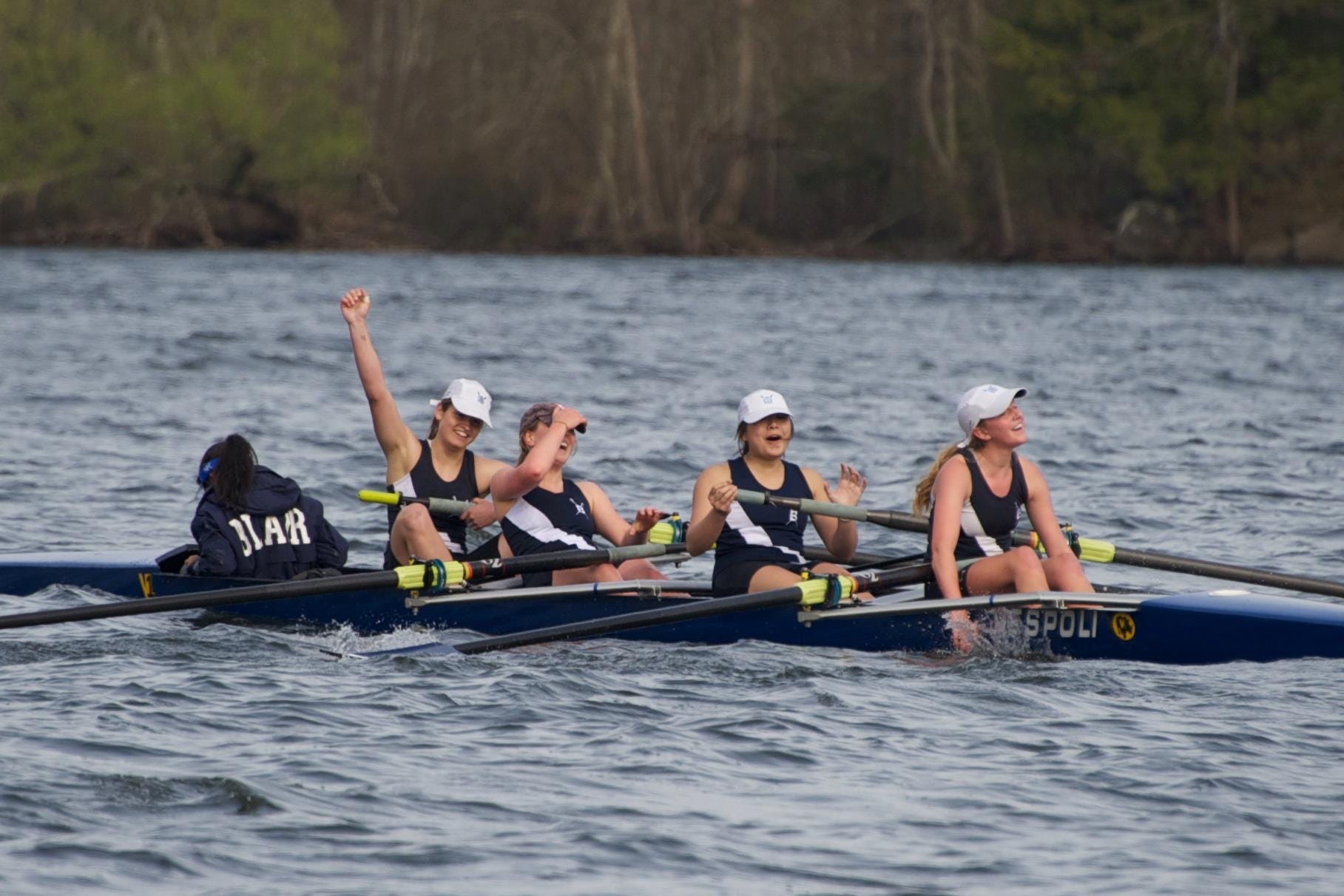
I loved rowing so much that I decided to do it in college. It’s still listed under my alumni profile: student-athlete, women’s lightweight crew team. During this time, “rower” was very much part of my identity. I spent upwards of 18 hours each week at the boathouse, and all but lived in my MIT crew gear. For 8 years, this sport shaped a lot of who I was and who I would become. It defined my values about teamwork, resilience, and commitment. It also challenged me in many ways, including my sense of self, my trust in others, and my willingness to make sacrifices. But to this day, many of my best friends, including my husband, are ones I made through rowing.
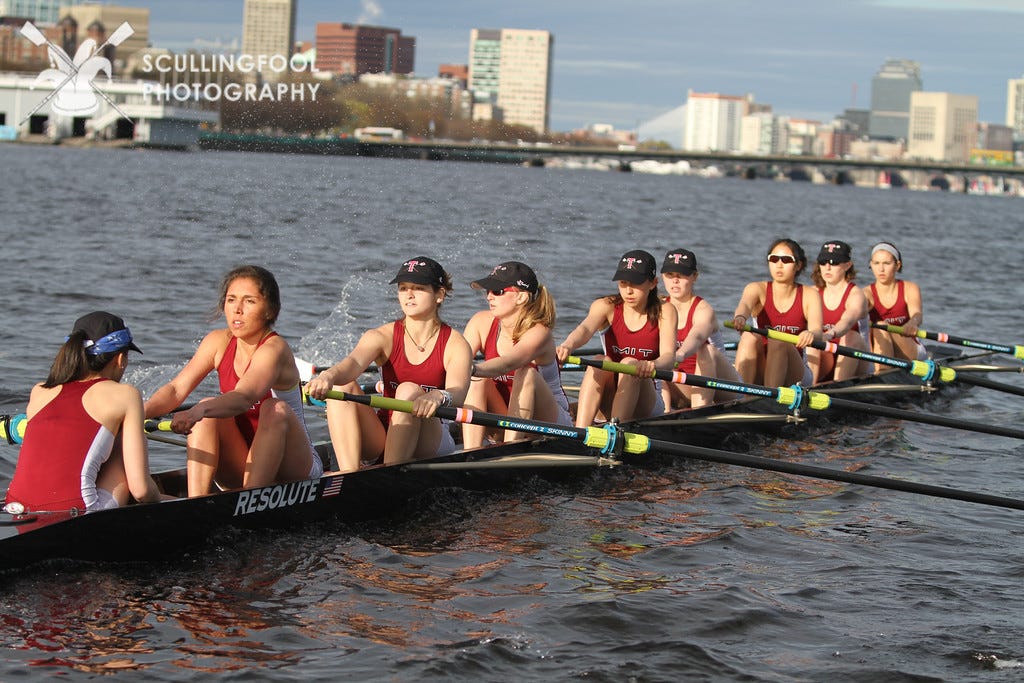
During this time in my life, my participation in sports was always backed up by an institution: first, my high school, then my university. I could call myself a “rower” because someone else (i.e., a school) said I was. There was a team roster I could point to for evidence of my claim. I didn’t really consider the fact that I was a rower simply because I rowed. In fact, if someone rowed every day, but wasn’t part of a team or a club, I might have even considered them “less” of a rower than me. (Yikes!)
(To be abundantly clear—this logic is flawed. I have classmates who majored in aerospace engineering and went into finance. I would not trust them to build a rocket. They are not aerospace engineers because an institution or a diploma told them so.)
After college, I stopped rowing every day. Part of it was circumstantial—I moved to Colorado for grad school, where water was a scarce commodity, and boat clubs are few and far between. But the other part was the phase of life I was in. After years of rowing, often training twice a day, I was excited to try new sports. And I did! I got really, really into trail running. I love trail running for the same reasons I love rowing: its a meditative motion that requires high focus, and gets me out into nature. It is much more of a solo sport than college rowing, but I have met some incredible people out on the trail.

Since 2022, I’ve run more than a dozen trail races of varying distances, and spent the vast majority of my Saturday mornings running around in nature. But during all that time, I never called myself a runner. Maybe if I was pressed, I would say “trail runner,” as a means of telling someone what kind of “Boulder” I was, but I was never a runner. I wouldn’t dare claim to be a runner. There was something about the trail community that seemed more homegrown, more accessible. Most colleges don’t have a “trail running” team; there are XC runners, but those felt distinct from the strange (albeit welcoming) trail community I had stumbled ass-first into in Colorado.
When I think of a “runner,” I think of a type: they’re often in split shorts and high-stack shoes, with large, reflective sunglasses, and usually have an upper thigh tattoo. They probably ran track in high school, and then college. They know what a steeple chase is. They aren’t afraid of 3-inch inseams. They are the elite group of run-club members who have been pre-vetted by institutions—they are runners.
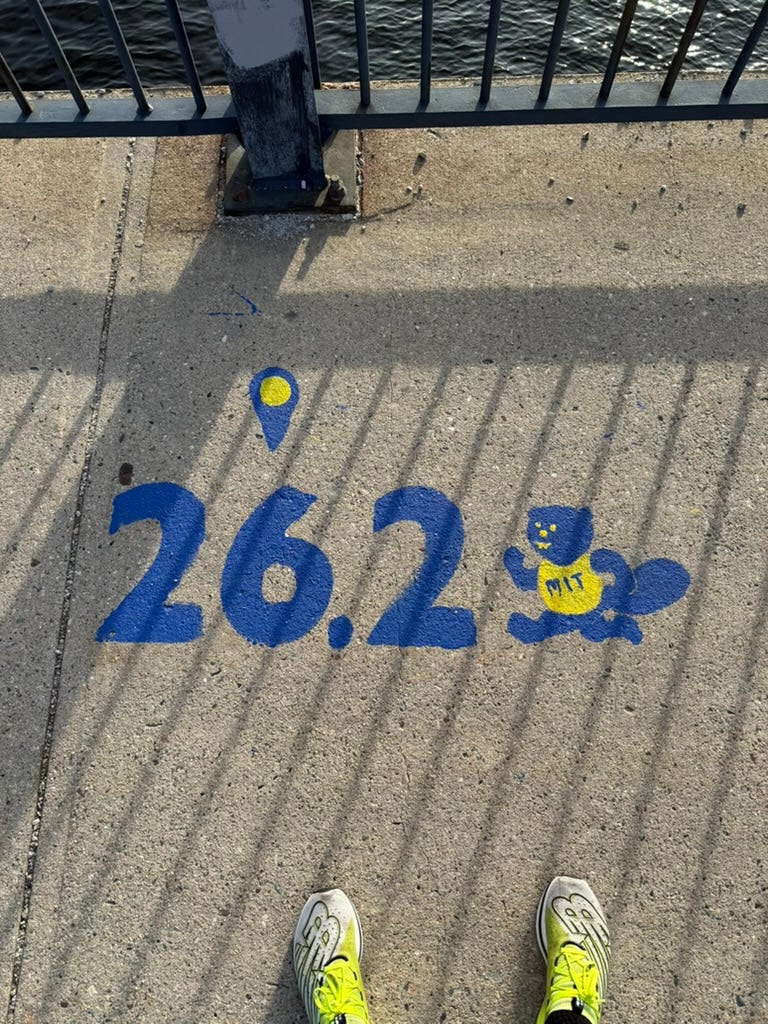
I say this all at the risk of navel-gazing, because I want to prove a point. Right now, it is the week of the Boston Marathon. For those who aren’t in the know, or from New England, the Boston Marathon is the oldest and perhaps the most widely recognized major marathon in the world. Race day—locally referred to as Marathon Monday, or Patriots’ Day—is a Massachusetts state holiday, a holy day reserved exclusively for running, spectating, and drinking. This year, I’m running!
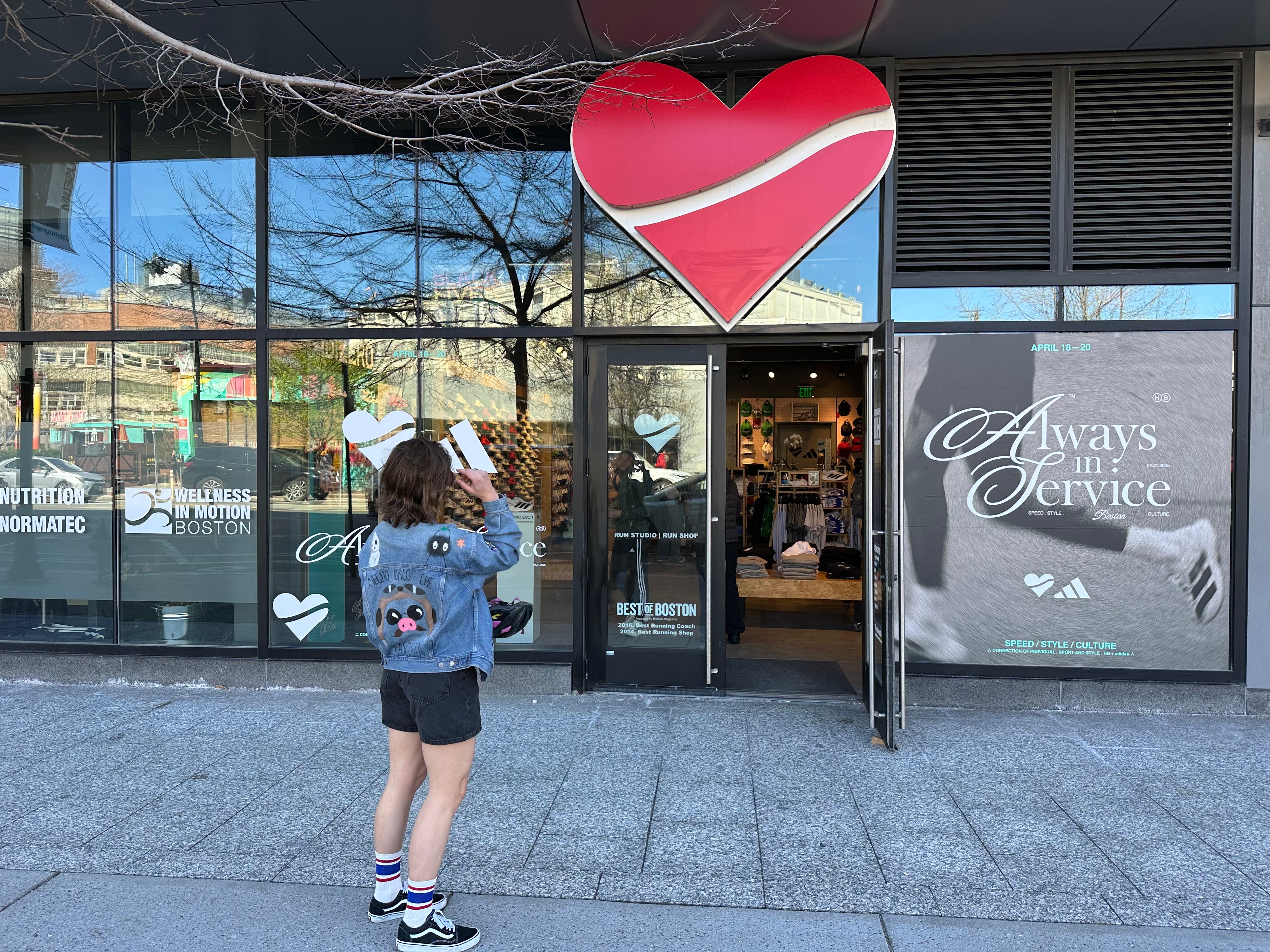
This isn’t my first Boston. I ran the marathon for the first time in 2025. But this year feels different—it feels calmer. I think this is due, in part, to some newfound self-confidence. Maybe it’s because I’m turning 30 this year, or maybe I’ve just run out of bandwidth to care about externalities, but at some point during my four months of training, some final, longstanding dam inside me finally burst.
Yes, a tiny, new voice inside my head began to say. You’re a runner.
Idiot.
You’re a runner because you run. You’ve been running this whole time. You’re a runner because when you explain to someone what you like to do in your spare time, and follow it up with, “but I’m not really a runner,” they look at you like you’re crazy, like you are an asshole.
It took far too many of these encounters to realize that I was, indeed, being an asshole. Because if I—someone who has qualified for and run the Boston Marathon, a feat people spend years trying to accomplish—resort to some “aw shucks” nonsense and claim that I’m not really a runner, what does that imply about how I view everyone else? I had spent so long viewing myself through the lenses of various institutions and qualifications that I couldn’t even see myself clearly anymore.
And I don’t mean to say that I’m a runner because I qualified for Boston (or BQ’d, as the cool runners say). That would simply be exchanging one institution for another. I’m a runner because running is something I do. It doesn’t even matter how often I do it, or how fast I am. I would never berate someone else for calling themselves a runner no matter how much they ran. They could run once a month and I’d say yes, of course! You like running, and running is something you do—of course you’re a runner!
I know in reality there’s a lot more to identity—culture, values, history, and community, to name an incomplete list. And there are many cultural aspects of running that I don’t really connect with, at least compared to what I’ve found in rowing and trail communities. But that is, perhaps, an essay for another time.
For now, to everyone running this weekend—good luck, and don’t forget to have fun!