

This article is part 3 of my investigation of the overlap between sports science, astronaut training, and the physiology of long-duration spaceflight. You can read about it here.

In my previous two articles, I covered how we select and train astronauts for space, as well as the basic foundations of strength and endurance training. Now, I am going to take you, dear reader, on a journey to Mars—and in honor of the recent finale of the Tour de France (men’s version), and ongoing Tour de France Femmes, I’m going to propose a training plan for astronauts that will prepare them for a 30-day surface mission in the style of a cycling Grand Tour.
Why a Grand Tour?
Or, for those unfamiliar: what exactly is the Tour de France, and why is it relevant to spaceflight?
The Tour de France—the most famous of the three prestigious multi-week cycling Grand Tours—is a 23-day event where cyclists must compete over 21 stages, often cycling 4-6 hours a day in adverse weather over routes that feature intermittent sprints and grueling climbs. While obviously not a perfect analogy for human spaceflight, the Tour has a few notable features that could provide lessons learned for our intrepid astronaut crew:
It is a multi-week event where athletes are expected to put out repeated daily performances.
Athletes must deal with sleep disruption, weeks of cumulative fatigue, and evolving operational goals.
Athletes are expected to perform risky technical acts, where accidents can lead to injury or death.
Some days, riders may be trying to win the stage; other days, their role may be to support as a “domestique”—someone who breaks the wind and sets the pace for a rider who will then go on to try to compete in the general classification, or overall standing. In between stages, riders are expected to give press interviews, attend team meetings, and comply with 2 am doping control tests all while trying to recover ahead of the next day’s stage.
Astronauts, of course, do not have to comply with anti-doping protocols. They are, however, a closely monitored population, who are often under a tremendous amount of physical, cognitive, and emotional stress. Like cyclists, they are expected to give press interviews and present a public image on top of their daily performance. Both groups rely on their team to manage workload and optimize performance. Both groups train for months, if not years, for their mission.
The lessons I want to take away from cycling are not the details of each day, or specific training protocols; I want to make it clear that astronauts should not exclusively train like cyclists. If they did, it would exacerbate many of the risk factors of prolonged microgravity exposure, such as reduced bone mineral density that can lead to an increased risk of bone fracture and osteoporosis later in life. I am also not under the impression that astronauts will be able to train like cyclists, who often cycle their bicycles upwards of five hours each day.
Instead, I want to focus on three core aspects of preparing for and racing in cycling Grand Tours that are, from my perspective, most relevant to spaceflight:
Macrocycle training: how can astronauts prepare themselves physically, over months or years, for a 30-day event?
Recovery: how should astronauts manage workload and stress during their mission to recover for their next task?
Team dynamics: how do we assign roles and manage workload across a team?
Onwards to Mars!
Mission Assumptions
For our Mars mission, I will be baselining the “30-Cargo-300” concept of operations described in the recent National Academies publication, with additional information supplied by NASA’s Strategic Analysis Cycle 2021 (SAC21) Human Mars Architecture paper by Rucker, et al. The assumptions for this mission include:
Crew: four astronauts
Surface stay: 30-sols, with a roughly 50-Earth-day Mars-vicinity phase
Earth to Mars transit: roughly ~300 days
Mars to Earth transit: roughly ~500 days
Science return: as many EVAs as possible, to relevant sites of interest, while maintaining the crew’s ability to recover in between sorties
The focus of this article will be on the pre-flight training, transit, and surface stay protocols for exercise. The astronauts will have to come back, but we’re going to assume that the hardest part of their training and preparation is over at that point, and their primary goal will be to remain alive, healthy, happy, and productive for the remainder of their journey home.
In addition to these basic ground rules, I will assume that each day, astronauts will be aiming for approximately 8 hours of sleep, ~6 hours of science activities, and 1-2 hours of maintenance and repair, as per analysis of the average workload on the International Space Station. I will be arguing that astronauts should be training more each day if they hope to be physically fit for surface operations; however, I recognize that they are not full-time athletes, and there are other activities that are critical to mission success. Likewise, unplanned maintenance can sometimes eat into the best-laid plans, no matter how meticulous the planning.
Pre-Flight Training & the Macrocycle View
Before we start training our astronauts, I want to ask a question you should be expecting: who do we choose for our crew, and why? And does it matter?
It turns out, it does—in specific circumstances.
Specifically, I would hedge my bets on astronauts who already have a long history of strength training. There is a growing body of work that shows some aspect of “memory” in our muscle fibers—meaning that after periods of inactivity, muscle size and strength can actually return faster than the first time they were acquired. In one study, women who detrained for 30–32 weeks after a 20-week resistance program displayed rapid strength return and muscular adaptations during six weeks of retraining, with some adaptations having persisted through the layoff.
Unfortunately, cardiovascular fitness does not exhibit quite the same “memory,” though there is an argument to be made for starting your astronauts as fit as possible, so it takes longer to lose it. There is also something to be said about having astronauts who are already used to the demands of training and have built it into their lifestyle. (And hopefully, they enjoy it!)
With all that said, my inclination would be to treat pre-flight training like a “build” phase of a macrocycle, during which astronauts should work to become the ultimate hybrid athletes: the more aerobic and strength capacity they have before they set off for Mars, the farther they have to “fall,” meaning hopefully that even with some strength and conditioning losses during transit, they can arrive at Mars with a significant portion of their fitness maintained.
Of course, the real “peak” we are aiming for—or at least, the period of performance that is driving the training protocol—is in fact our 30-day mission on Mars. Viewed from above, the macrocycle would therefore have three primary components:
Pre-flight training goal: Base. Build muscular capacity and VO2max ahead of launch.
In-flight training goal: Maintenance and shift towards specific training. Stave off the worst of the effects of microgravity and build towards specific, functional fitness for EVA.
Surface mission goal: Performance. Adapt (as quickly as possible) to the gravity environment, begin EVAs, and recover between sorties.
For our pre-flight training, in order to build muscular capacity, I would prescribe astronauts two 24-week strength training cycles, or roughly a year of strength building. This would involve lifting three times a week for roughly one hour per session, with a target intake of 1.5-1.8 g of protein per kg of bodyweight each day.
The key lifts throughout this cycle would be the Olympic lifts (squat, deadlift, bench), and functional compound lifts like Bulgarian split squats, overhead press, farmer’s carry, cable rows, lat pulldowns/pull-ups, and back extensions. To help improve balance and stability, I would also recommend performing single-leg rowing deadlifts and BOSU-ball goblet squats.
On the cardiovascular side, my recommendation would be to assign astronauts a training modality that is both 1) most applicable to their mission and the exercise equipment they will have onboard their spacecraft, and 2) most enjoyable to them. It’s the same advice I give to people who are looking to “get fit” and ask how I can run so much: if you don’t like running, don’t run! There are so many ways to be active, and you should absolutely find a sport that speaks to you.
That said, the goal for our pre-flight training is not just movement; it is building our astronauts’ aerobic base and VO₂max ahead of launch. Therefore, I would probably recommend they do some mixture of running, cycling, and maybe indoor rowing. Running is a low-overhead workout that has little to no learning curve for technique, and is easy to program for threshold and VO₂max work. Cycling in particular is an excellent cross-training option for the injury-prone, and rowing provides additional benefits as a full-body workout.
The pre-flight cardio protocol I would recommend for the astronauts—if they already have decent cardiovascular fitness—is to spend ~24 weeks increasing their aerobic training to approximately 500 quality minutes (or roughly 8 hours) each week. Over the course of this cycle, the crew would ramp up from an easy ~3-4 hours, and slowly incorporate speed and power work while running, cycling, or rowing, until they can sustain the total workload. Ultimately, the goal would be three quality sessions a week: one threshold day, one VO₂max day, and one longer (easy) workout on weekends. The rest of the minutes would be easy aerobic volume.
The longer session (~2-3 hrs) on the weekend could take the form of a long bike ride, a long run, or a long, steady hike through the mountains. It may sound like a lot, because it is—but it is also very common for endurance athletes, and will help build towards the fitness required for EVA!
All told, an example training split for this phase would look like:
Monday: easy run, ~45 min
Tuesday: AM VO₂max interval run, ~60 minutes, PM lift
Wednesday: AM easy bike, ~60 min
Thursday: AM threshold run, ~65 min, PM lift
Friday: easy run, ~70 min
Saturday: long hike or bike, ~180 min, PM lift
Sunday: rest day!
Launch & Transit to Mars
Ideally, our astronauts have reached a local—or perhaps global—peak in their individual fitness levels right before their launch date. At this point, they are now strapped to a rocket, and will spend the next several hours (though more likely days) adapting to the acute effects of microgravity and preparing for their journey to Mars. These include symptoms of “space sickness”—such as dizziness, nausea, and spatial disorientation—on top of a general upward fluid shift.
My recommendation is to treat the days following launch like traveling to altitude, where the crew should take 2-3 days of rest to recover from travel and give their body some initial time to adapt. The first day—the “travel” day—is a wash, with the crew needing to check out their vehicle systems and potentially rendezvous with other spacecraft before they begin their journey to Mars. Once the crew has acclimated—or at least reached some new definition of normal—they can reintroduce exercise and begin their transit training protocol.
With their current schedule on the ISS, astronauts have approximately two hours a day allocated for exercise. However, as I mentioned in my previous article, when you take out the time required for equipment setup and breakdown, this roughly shakes out to ~45 minutes of lifting and ~30 minutes of cardiovascular conditioning. If, during each cardio-focused workout, astronauts were to allocate sufficient warm-up/cool-down time (which I would place around 10-15 minutes for each), that would put them at…zero minutes of actual work. In reality, they are probably skimping on the warm up/cool down time, and instead jumping right into high-intensity intervals. They might do something like:
5-minute warm up, probably 50-65% max HR
10 x 1 min on at 90-95% max HR, 1 min off at 65-70% max HR
3-minute cool down
Or, on steady-state days, they might do ~30 minutes straight at approximately 75-80% max HR. Compare this to current CDC guidance, which recommends that adults get at least 30 minutes a day (on average) of moderate-intensity exercise, and ideally 45 minutes a day “for additional health benefits.” If astronauts are working out six days a week, this puts their recommended time per workout at 50 minutes of moderate exercise, or 30 minutes of vigorous exercise per session. In short: at their current training load, astronauts are sitting right at the CDC’s stretch goal.
But this prescription is still based on research. Currently, the best Earth analogue we have for exercise countermeasures in space is bedrest. In bedrest countermeasure research, patients undergoing bedrest are prescribed daily exercise, often with lower-body negative pressure suits to help draw blood towards the leg and apply footward loading to mimic weight-bearing, upright exercise. The patients’ fitness is tracked before, during, and after bed rest.
The results are promising: in one 30-day bedrest study of female identical twins by Lee et al., one twin performed 40 minutes of interval treadmill exercise within lower-body negative pressure at 40–80% of pre-bed-rest VO₂max, 6 days/week, while the other had no intervention. The exercise protocol protected treadmill VO₂max and sprint performance relative to the non-exercising twin.
Another study by Shibata et al. in 2010 showed that supine cycling similarly prevented cardiovascular deconditioning and preserved left-ventricular mass. However, exercise alone did not fully preserve tolerance for standing; orthostatic tolerance was maintained only when exercise was combined with restoration of plasma volume.
The main change I would advocate for in flight, which I prefaced in previous articles, is simply to increase the crew’s training volume during transit. My recommended split for in-flight training is therefore:
Two cardio sessions a day; one longer session (~90 minutes) in the morning, and one shorter (45-60 minute) session in the evening
Half of all cardio sessions on treadmill for bone loading, with the other half on the ergometer if possible. The aim here is to continue to train all muscle groups on the ergometer while maintaining lower-body loading, tendon resilience, and resistance to impact on the treadmill.
One strength training session a day, full-body; astronauts are not bodybuilders, and the benefits of hitting all muscle groups daily would outweigh any benefits from sticking to strict leg days, back days, etc.
Three structured “workouts” a week—one at threshold, one targeting VO₂max, and one performing the same function as a “long run” in a marathon training block. The purpose of the longer easy session is to prepare astronauts for long days out in the field during their EVAs.
Notably, preserving VO₂max is not equivalent to preserving operational readiness. A comprehensive training protocol alone will not combat issues with standing tolerance, balance, or locomotor coordination that astronauts will face upon landing. And so that brings us to…
Surface Operations
Even with our best efforts, astronauts will arrive at Mars slightly deconditioned, and, potentially more concerningly, with significant sensorimotor impairment caused by the transition from microgravity to the 0.38 g environment of Mars. The latter cannot be overstated. Just look at the recent balance test performed by astronaut Christina Koch one week after returning from the 10-day Artemis II mission around the Moon. Granted, they’re intentionally making this test quite difficult for her by having her keep her eyes closed and arms folded into her body.
However, if that video is any indication of the state our future astronauts will be in when they touch down on Mars, then we have more than just bone density and muscle loss to be concerned about. No amount of lifting or erging will help their inner ears to re-adapt to gravity. I say this not as a point of defeat, but rather as a final caveat: this section will just be trying to address astronaut fitness, rather than the whole suite of physiological challenges of long-duration spaceflight.
Luckily, we do not need the astronauts to be elite athletes on the surface of Mars. They just need to be geologists! In the end, the goal of all this training before and during flight is to ensure that astronauts maintain enough fitness for safe and effective EVA. Once they are on Mars, and have been given time to regain their sense of balance, we can let the games begin.
All told, I don’t know how long these future astronauts will need to adapt to Mars gravity. It might be a week. It might be a few days. (Mars has ~⅓ Earth’s gravity, remember—and we might think of a specific countermeasure that does help them regain their sense of balance faster.) Regardless, they will need at least 1-3 days to acclimate ahead of their first EVA.
Like cyclists in a Grand Tour, astronauts will also need to be realistic about their workload from one EVA to the next. Recent baseline lunar architectures recommend a rest day for every 3-4 days of EVA. Current NASA protocol also mandates the “buddy system” during EVA, so that each astronaut always has a partner, and does not perform an EVA alone. A third crewmember will generally serve as the intravehicular (IV) point of contact—basically, someone who is monitoring the EVA from inside the station or surface habitat, who can help troubleshoot or respond if something goes wrong.
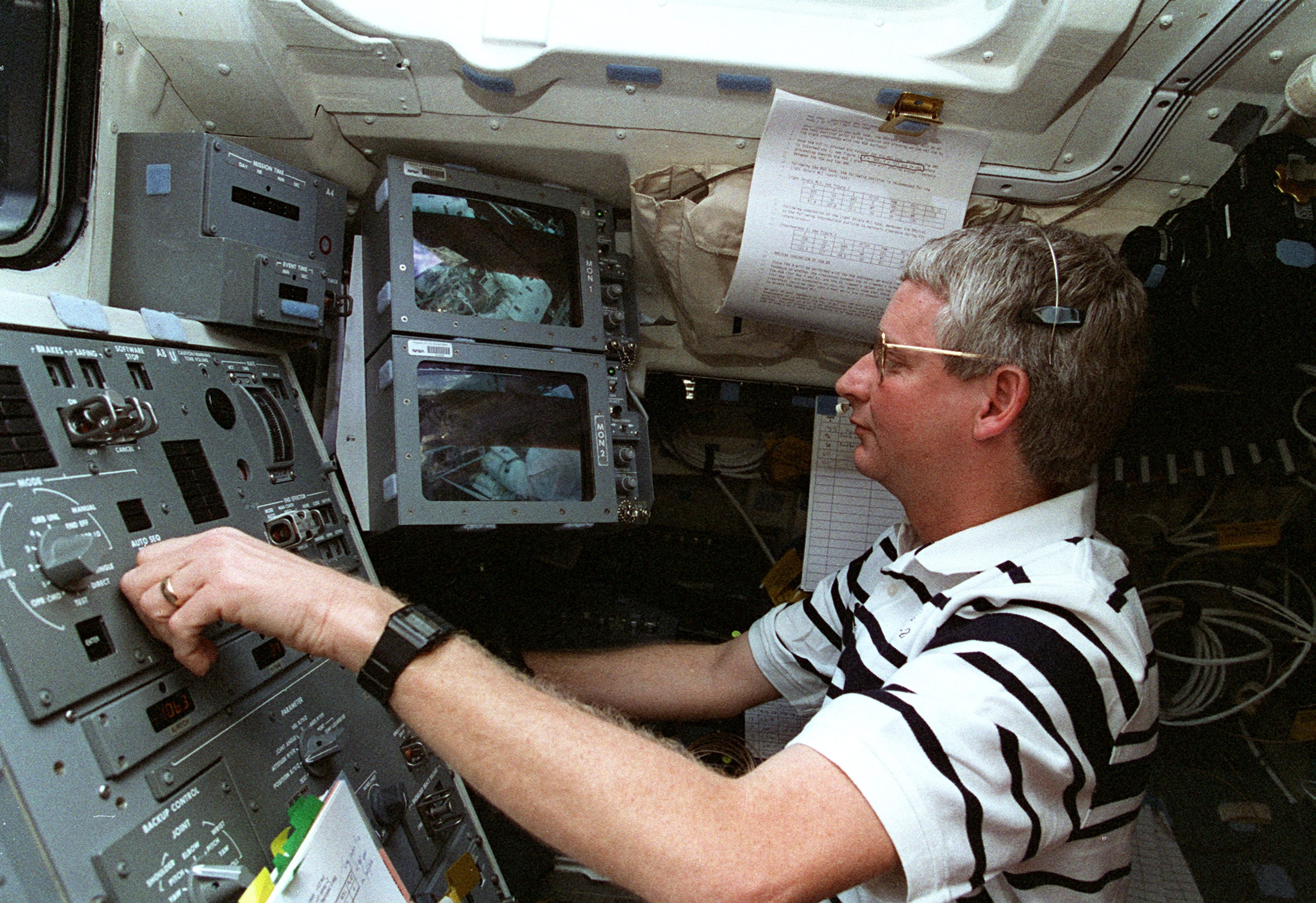
One way to maintain EVA cadence is to rotate through the crew, so you have teams of two going out every other day. For the sake of this analysis, I’m also assuming all four crewmembers are stationed on the surface, rather than some concept of operations that baseline two in a roving pressurized rover, while two remain in orbit.
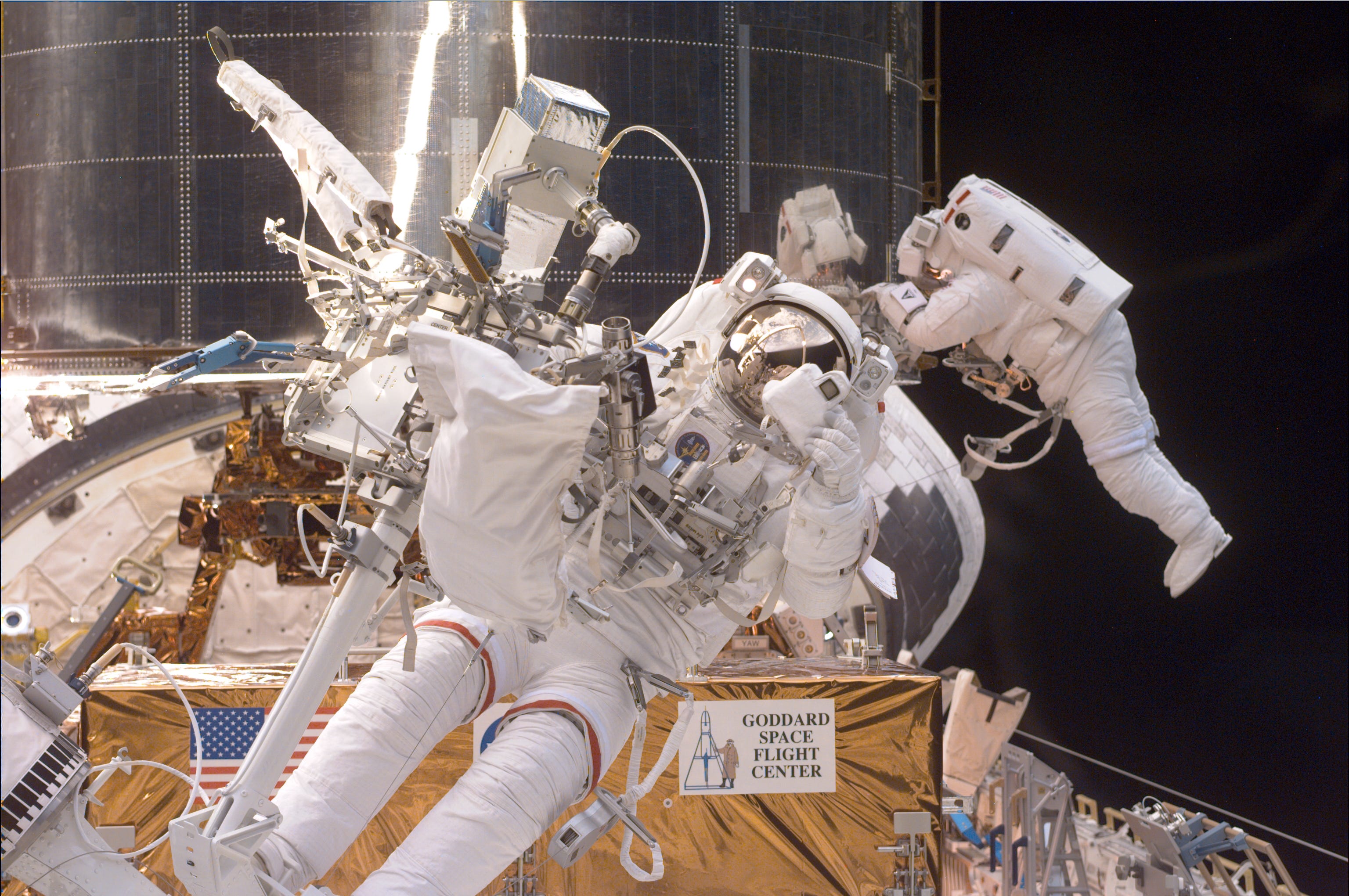
We can thereby break out our team of four astronauts into their primary roles, which will rotate from one EVA to the next:
EV1 - Field-science or engineering task lead
EV2 - EVA support, navigation, equipment carry
IV1 - Ops director; suit telemetry, consumables, communications and timeline
IV2 - Science support, habitat systems, medical/rescue readiness and sample-receiving preparation
This is, of course, where our Grand Tour analogy breaks down even further. No one is trying to “win” each day of EVA. Rather, we should think of this now like geology field work: the goal is to visit sites of interest, perform good science, and achieve the operational objectives over the course of the mission. Another analogy here is mountaineering or exploration efforts, during which explorers may venture out from a base camp over the course of increasingly ambitious sorties. Their 30-day EVA schedule may therefore look something like:
Day 1-3: Habitat checkout; transfer to habitat, medical checks, gravity adaptation period.
Day 4-5: First two local EVAs (~3 hours): suit checkout, initial sample, habitat/MAV external inspection, cargo and utility work.
Day 6-8 First “down” day, and contingency days for additional adaptation, habitat construction, and maintenance; initial science campaign finalized
Day 9-13: Science campaign 1 - astronaut pairs rotate through EV day, IV day, one full-team rest day, repeat.
Day 14-15: Suit servicing, data analysis, and campaign planning.
Day 16-20: Science campaign 2 - astronaut pairds once again rotate through through EV day, IV day, one full-team rest day, repeat.
Day 21-22: Recovery, data analysis, suit maintenance. Final science sites selected, and “go backs” noted.
Day 23-27: Science campaign 3 - focus on returning to any notable sites or locations that were not achieved in first or second campaign. Deployment of any experiments that will remain on the surface.
Day 28-30: Wrapup, launch preparation
During this month, the focus is on science operations rather than forward conditioning. However, during the “down” or off days, I would prescribe some light conditioning—like cyclists at the grand tour, or pilots in between missions, light lifts along with cycling, erging, or running can aid in recovery and operational readiness. The goal of these sessions should be to maintain fitness and perform “prehab”—exercises that keep astronauts strong and healthy under the unique demands of operating in an EVA suit, which can often cause nasty overuse injuries.
Concluding Thoughts
Space is hard, and Mars is very, very far away. With a year-long transit time, exercise alone cannot be the only countermeasure. However, I’d love to see an ISS experiment where we did up the exercise prescription to more than just ~30 minutes of cardio a day. If we focused on multiple sessions split across full-body and high-impact cardio like that offered by the ergometer and treadmill, would we see better re-acclimation to the gravity environment? Who knows! Maybe the astronauts would still be wobbly when they land. Maybe it will always be operationally infeasible to allocate that much time to fitness.
I also want to propose that future missions should consider including distinct physical roles for crew beyond “EV” and “IV.” To take one final lesson from cycling, each member of a Tour de France team has a distinct role: there are the general classification (GC) riders, who are aiming to “win” the overall standing by having the lowest time across the full tour. These are who you think of when you think of the Tour de France “winners.” However, there are also the domestiques, whose job it is to assist the GC riders; there are puncheurs, who excel on rolling hills and will often go for stage wins on days that suit them; and then there are the sprinters, who will compete for intermittent sprint points, and win a separate sprinter classification. All of these riders have specific training plans to fit the needs of their own individual “missions” during the tour.
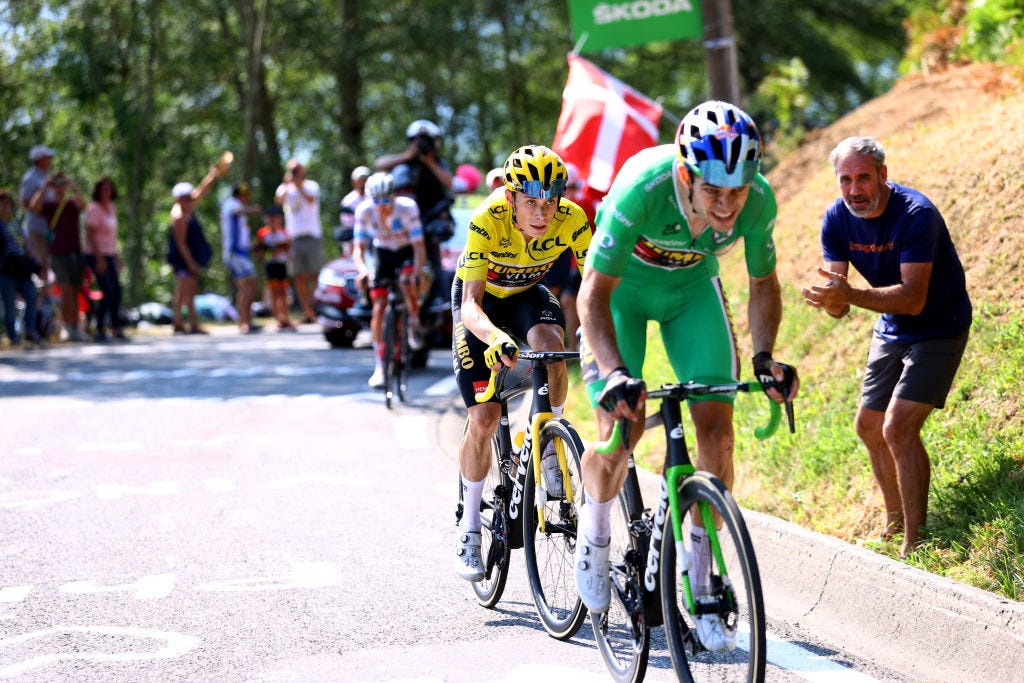
What if we took our analogy all the way, and gave distinct physical roles to each astronaut on a Mars mission? Could we individualize their training, or reallocate tasks to ensure that certain team members arrived fitter for EVA? Maybe!
Or, perhaps, we should learn from my sister, who once had an Olympic rower on her geology field trip to Alaska, where she put him in charge of carrying all of the heavy field equipment.
(Maybe, we should just send rowers to Mars!)
Jokes aside—I do think there is something to be said for having a diverse set of strengths and skills spread out across a crew. Playing up each individual’s strengths—whether it be in endurance, strength, tactical planning, or affinity for rocks—will be paramount to mission success. There is no one true “right” combination, just like there is no one combination of riders or players that is guaranteed to lead a team to victory.
This concludes my thought experiment! I’m sure in the future, I’ll continue to think of ways sports science can help us think about spaceflight and human-centered design. Thank you for following along!
Further Reading
National Academies of Sciences, Engineering, and Medicine. 2026. A Science Strategy for the Human Exploration of Mars. Washington, DC: The National Academies Press. https://doi.org/10.17226/28594.
M. A. Rucker et al., “NASA’s Strategic Analysis Cycle 2021 (SAC21) Human Mars Architecture,” in 2022 IEEE Aerospace Conference (AERO), Big Sky, MT, USA: IEEE, Mar. 2022, pp. 1–10. doi: 10.1109/AERO53065.2022.9843237.
“Low Bone Mineral Density and Associated Risk Factors in Elite Cyclists at Different Stages of a Professional Cycling Career - PMC.” Accessed: Jul. 22, 2026. [Online]. Available: https://pmc.ncbi.nlm.nih.gov/articles/PMC10090358/
S. M. Schneider, S. M. C. Lee, A. H. Feiveson, D. E. Watenpaugh, B. R. Macias, and A. R. Hargens, “Treadmill exercise within lower body negative pressure protects leg lean tissue mass and extensor strength and endurance during bed rest,” Physiol Rep, vol. 4, no. 15, p. e12892, Aug. 2016, doi: 10.14814/phy2.12892.
S. Shibata, M. Perhonen, and B. D. Levine, “Supine cycling plus volume loading prevent cardiovascular deconditioning during bed rest,” J Appl Physiol (1985), vol. 108, no. 5, pp. 1177–1186, May 2010, doi: 10.1152/japplphysiol.01408.2009.
“Risks of Human Spaceflight - NASA.” Accessed: Jul. 29, 2026. [Online]. Available: https://www.nasa.gov/hrp/risks/
R. J. Godfrey, S. A. Ingham, C. R. Pedlar, and G. P. Whyte, “The detraining and retraining of an elite rower: a case study,” J Sci Med Sport, vol. 8, no. 3, pp. 314–320, Sep. 2005, doi: 10.1016/s1440-2440(05)80042-8.
R. Lepers, A. Mater, H. Assadi, N. Zanou, V. Gremeaux, and N. Place, “Effect of 12 weeks of detraining and retraining on the cardiorespiratory fitness in a competitive master athlete: a case study,” Front. Physiol., vol. 15, Nov. 2024, doi: 10.3389/fphys.2024.1508642.
“Strength and skeletal muscle adaptations in heavy-resistance-trained women after detraining and retraining | Journal of Applied Physiology | American Physiological Society,” Journal of Applied Physiology, Accessed: Jul. 29, 2026. [Online]. Available: https://journals.physiology.org/doi/10.1152/jappl.1991.70.2.631