

It’s back to school season! Here in Cambridge, the students have returned, the leaves are changing, and I’ve been thinking more and more about AI in education. Part of this is because of my job: this semester, I’m mentoring an MIT senior design capstone in which the students will be using agentic software to design, build, and iterate on a lunar lander testbed.
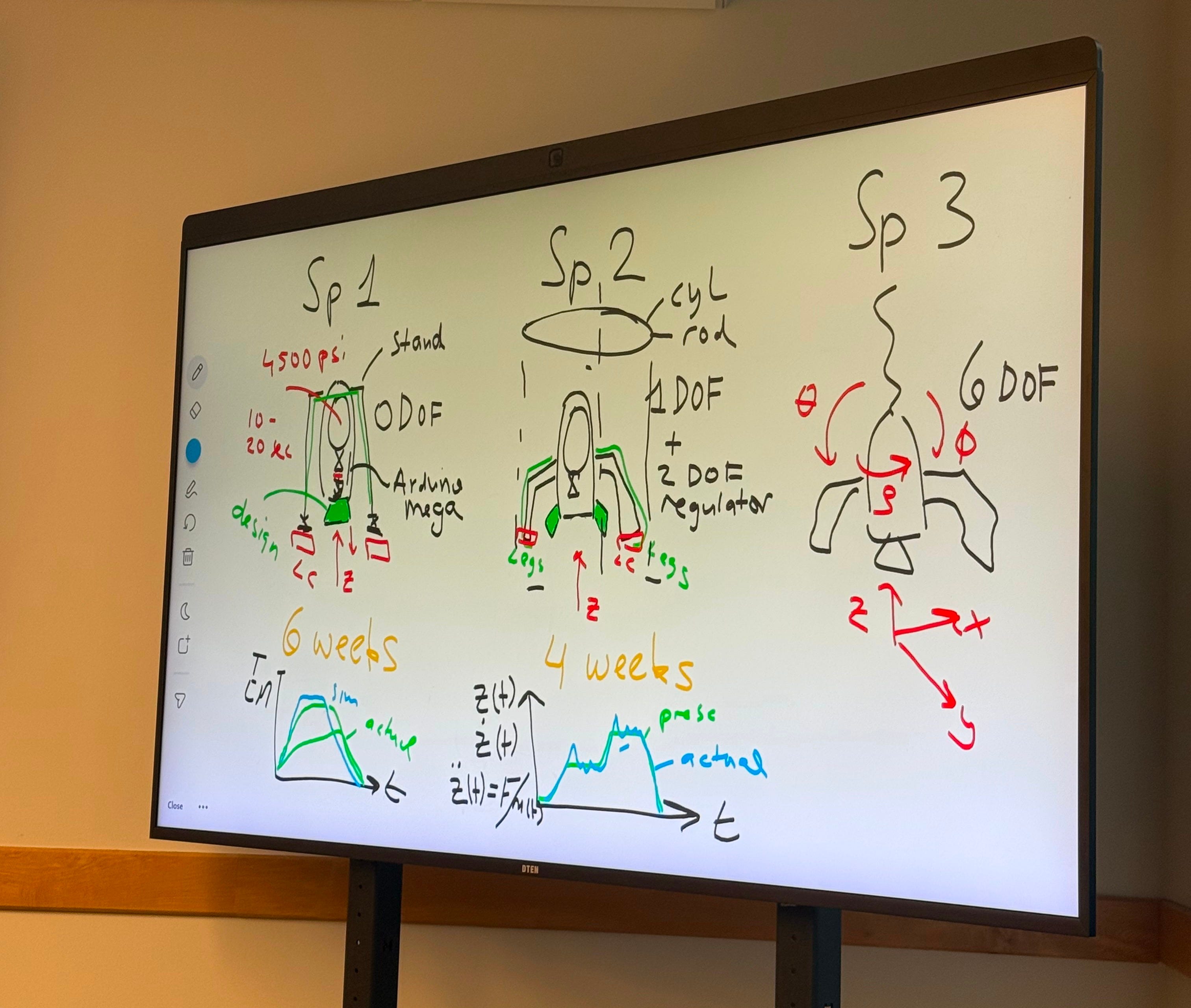
While I’m extremely excited about this opportunity, I’m also a bit nervous. I spent many hours over the summer going back and forth with the rest of the teaching staff to try to converge on a balanced syllabus that would 1) still teach the students the foundational knowledge that the course has been designed around for decades, while 2) preparing them for a world that is getting fundamentally rocked by AI. Though this course has been taught before, it is the first time the department is integrating AI directly into the design/build undergraduate capstone offering. This change is in line with MIT AeroAstro’s recent 2026 Strategic Plan, which highlights the need for “AI-Native Aerospace Engineers.” However, it was also developed in the shadow of MIT’s recent Report on AI and Education, which is more cautionary. It is absolutely worth a read for anyone who works in education. Though the report is specific to MIT, it puts forth a generalizable, measured approach to teaching in the current AI-education landscape.
We’re only a few weeks into the class, but I wanted document some of my initial takeaways from watching the students and instructors grapple with this new engineering process. In no particular order:
Students don’t want to use AI (for everything). This was a surprising, yet refreshing takeaway from our first week of class. When the instructors told the students that they would be learning how to use agentic tools as part of the course, many students express concern that they were going to graduate without a rigorous understanding of the engineering design process. From these initial conversations, it seems like the vast majority of students do not want to use AI as a shortcut. They want to learn, and they want to learn deeply. They are also afraid of entering the workforce without the fundamental knowledge needed to determine whether or not an AI’s output is accurate or correct.
People are creatures of (AI) habit. The students in this course that do use AI have already established their workflows. This is to be expected—when a course commits to using a specific (sponsor) company’s software, agent, or tools, there will be some pushback on adoption. However, the teaching staff have also been clear that the students don’t have to use AI for their design. The course is built around both agentic and “traditional” lectures, with the aim of teaching the longstanding design methodologies while also exposing the students to the basics of agentic workflows.
The most exciting part of engineering isn’t agentic. I’ve noticed a pretty stark contrast in the students’ reactions to the agentic lectures versus the traditional, in-depth technical ones. This is in no way a dig at our agentic lecturers—they are awesome, engaged mentors, and truly believe in their work’s ability to streamline the engineering process. However, the students in this class did not decide to major in aerospace engineering so they could ask a computer to design a rocket. They became aerospace engineers because they want to engineer things that have never been built before. I would argue that engineering is, fundamentally, a creative act, and I don’t think AI—whether it be agentic or generative—is at the point where it can truly innovate in the way that humans can. Besides, even if it was, why would we offload all the fun parts?
This leads me to my own thoughts on the course so far. It’s been a bit rocky, primarily because this is everyone’s first rodeo: it’s the first time these students are engaging with this material, the first time the aerospace engineers are teaching agentic workflows, and the first time the agentic workflow people are teaching aerospace engineers. But from my vantage point, the promise of AI looks just very similar to previous attempts at digital engineering. Design—and especially iterative design—is extremely manual. When high-level specifications (like customer goals, or mission objectives) change, the effect has to be cascaded first through the concept of operations, and then again at the level of subsystem design, requirement documents, interface control documents, verification strategies, and operations plans. If an agent can go through and propagate changes through disparate models, simulations, requirements and verification documents, it would make my life—and the life of many other systems engineers—significantly easier.
The rise of agentic workflow also corresponds to a shift in design methodology at the programmatic level. A lot of traditional aerospace projects have been designed using the “waterfall” method, where engineers start with the high-level mission objectives, break these down into requirements that eventually flow down to a subsystem or component level, and then go forth to build, integrate, and test their design. Modern programs—especially those at SpaceX and smaller, more recent startups—have adopted an agile workflow, which has its origin in the 2000s software engineering scene. The agile method focuses on short interim “sprints” that iterate through a design/test cycle while allowing the overall program to stay nimble. For hardware-focused engineering, agile requires rapid prototyping capabilities as well as the ability to move fast and break things.
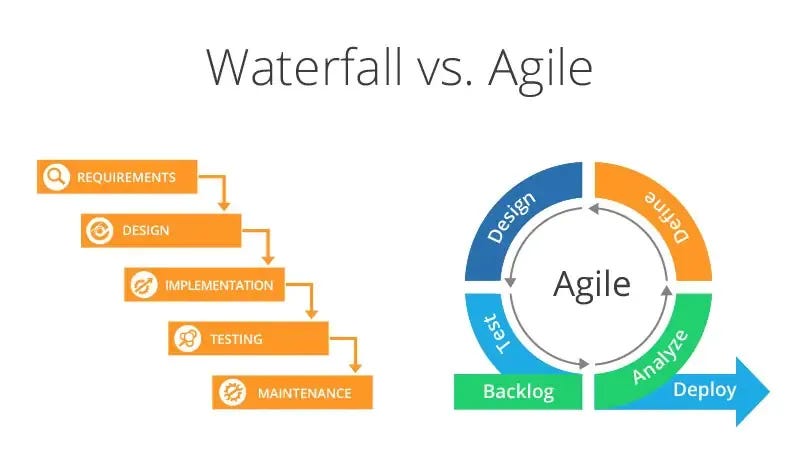
This shift from traditional design and the waterfall method to AI-enabled agile sounds alright on paper. I actually do think that agentic software will be really, really good at design iteration. I also think that these AI-generated designs will require significant, rigorous verification and validation to ensure that it has a) built the right thing and b) built the thing right. It will be non-trivial to ensure that your agent isn’t spitting out slop specifications or make-believe analyses.
However, my biggest concern with AI actually lies at the early part of the design process: concept generation. This is the part of the design cycle where there are no bad ideas. Your team is throwing things at the wall to see what sticks. Many aerospace programs do not need to spend very long in this phase of development; sometimes, you’re just building another airplane. Yet, for teams trying to do something truly novel—to land a rover on Mars, or to make the first reusable rocket—I believe that concept generation is the most critical part of the design process.
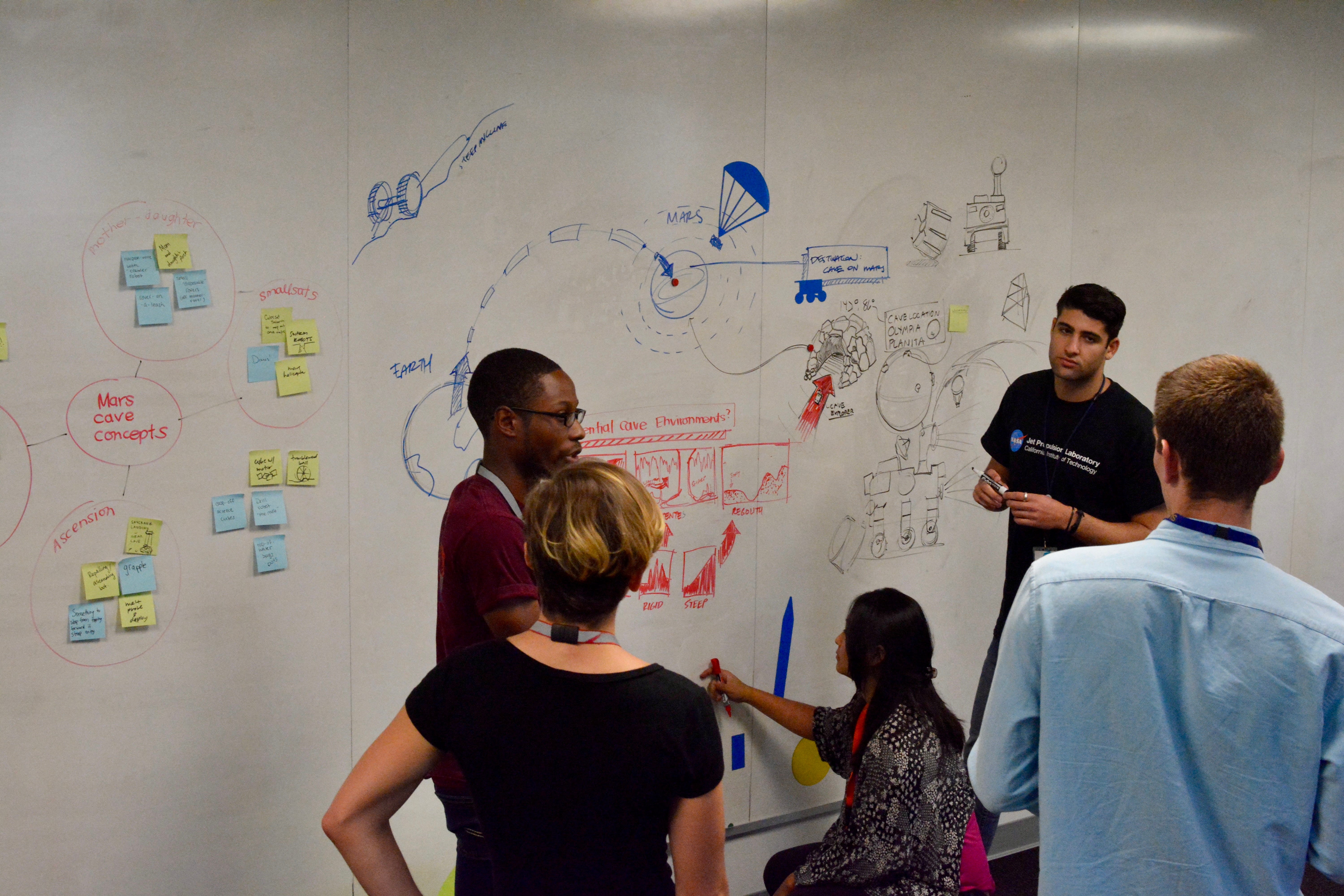
At NASA, they call this “pre-Phase A” work. It’s the work you do before the program truly begins, as you work to explore tradespace and think of all the crazy things you could build. Now, I’m biased, because my “real” internship was at NASA’s Jet Propulsion Laboratory, and I think JPL is the institution that had the biggest impact on my understanding of the engineering process. I spent my first summer there working alongside the Advanced Concepts Formulation Team, or “A” Team, in the aptly named room called “Left Field.”

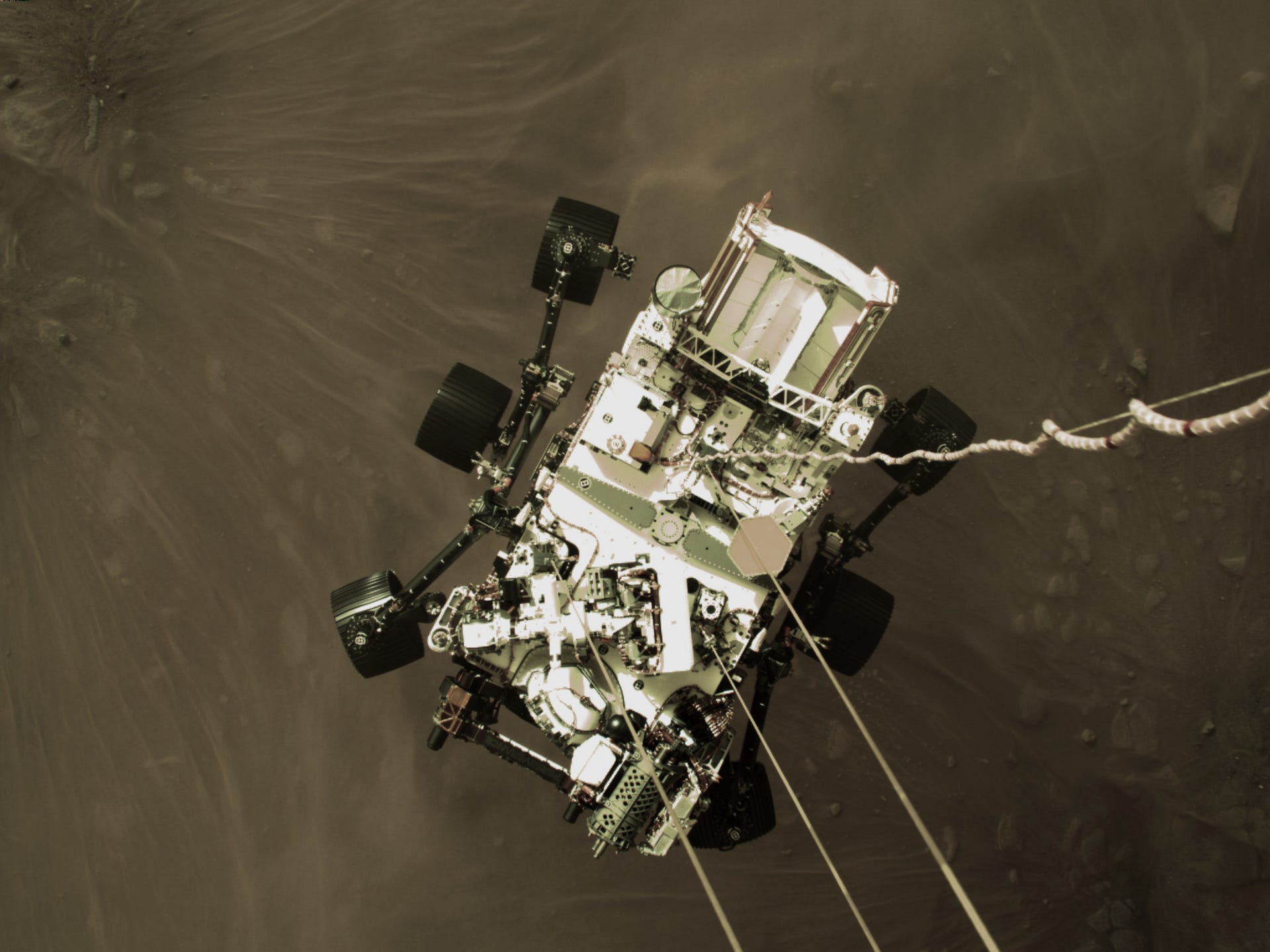
The ideas that come out of Left Field are, well, out of left field. The whole goal of the A Team is to spend 1-2 days coming up with bonkers ideas, taking them seriously, and figuring out how to make them work. This is the environment that gave us the Sky Crane landing system: a hovering, retrorocket-powered descent stage that would slowly lower the Curiosity rover to the surface of Mars in 2012, allowing us to land a rover that was 5x the weight of its predecessors. This technology would later be used to land the Perseverance rover in 2021.
When I’ve spoken to those championing agentic workflows—people who are often also selling a product to manage said workflow—they struggle to answer questions about the role of AI in concept generation and mission formulation. This struggle circles back to observation #3 from my class: engineering is inherently a creative act.
Now, you may argue that AI can already do this type of work. Generative AI can spit out hundreds of ideas with a single prompt. My counterpoint to this is threefold:
Generative AI is not truly novel. To test this, I had ChatGPT give me twenty “truly innovative” ways to land significant cargo mass (~tens of metric tons) on Mars. It gave me twenty ideas that were iterations on inflatable decelerators and retrorockets, which all have significant existing concept studies attached to them. When I told the LLM this, it apologized and pointed to original sources—mostly NASA concept studies—for all twenty ideas.
Generative AI does not have a comprehensive understanding of available resources or institutional culture. Concept generation requires intuition about the mission, the operational environment, the available resources—both on site and on Earth—and the capabilities of the institution that will be responsible for carrying out the mission. I think that some of the craziest ideas to come out of JPL succeeded in no small part because the people who came up with them had a deep understanding of the capabilities of their colleagues, and truly believed they could pull it off. The flip side of this is also true: I think that engineers trusted the crazy idea because they believed in the person who came up with it. I’m not sure if engineers would place teh same belief in Sky Crane if it came out of an LLM.
This is the fun part!!!!! I really cannot stress this enough. I’m not the first person to say this, but I truly believe that we should not be offloading the most joyous, fulfilling part of our lives (or jobs!) to machines. I try not to be a luddite—I think agentic tools have a lot of promise, especially in model-based design. Eventually, I may also be proven wrong about generative AI and creativity. If nothing else, however, learning to teach alongside this technology has made me reflect on the parts of my job where I find the most meaning. Let’s keep what serves us, and (responsibly) automate the rest.
I really enjoyed the article and it was written in a way I could understand. Thank you for sharing it with me.